
High ceilings, old hardwood floors, and plenty of potential for renovation: Apartments in need of renovation can be true dream homes—or turn into a financial gamble. What buyers should look out for, what costs are realistic, and what financial incentives are currently available in Austria.
The floor plan could be perfect, and the location is a dream anyway. It’s just that the bathroom dates back to the 1970s, the electrical system has seen better days, and there are drafts coming through the windows. What some see as a deal-breaker, others view as a unique opportunity. After all, an apartment in need of renovation offers the chance to design your new home from the ground up exactly the way you want it.
But between the first viewing and moving in, there are often more decisions to make than you might initially think. How much does new electrical wiring cost? Can you just knock down walls? And is the investment even worth it in the end? Anyone looking to buy an apartment in need of renovation should therefore not only consider the opportunities but also be aware of the risks. After all, especially with older properties, seemingly minor issues can quickly turn into major cost factors.
Is it worth buying an apartment that needs renovation?
The answer is: It depends. Apartments in need of renovation are particularly attractive if they are in a good location, are structurally sound, and are offered at a significantly lower price than comparable, already renovated properties.
The major advantage lies in the ability to customize the design. Floor plans can be adapted—as long as it is structurally and legally feasible—materials can be selected personally, and technical systems can be brought up to modern standards. Those who already have a clear vision of their own home don’t have to make compromises when someone else is handling the renovation.
However, the seemingly low purchase price should not obscure the fact that the actual total costs can be significantly higher. It is therefore crucial to compare the purchase price—including ancillary costs—and the renovation budget, on the one hand, with the market value of a comparable renovated apartment, on the other.
Special caution is advised for buildings where not only the apartment itself but also the roof, facade, or risers need to be replaced. This is because such projects may result in additional costs for the homeowners’ association.
How much does it cost to renovate an apartment per square meter in Austria?
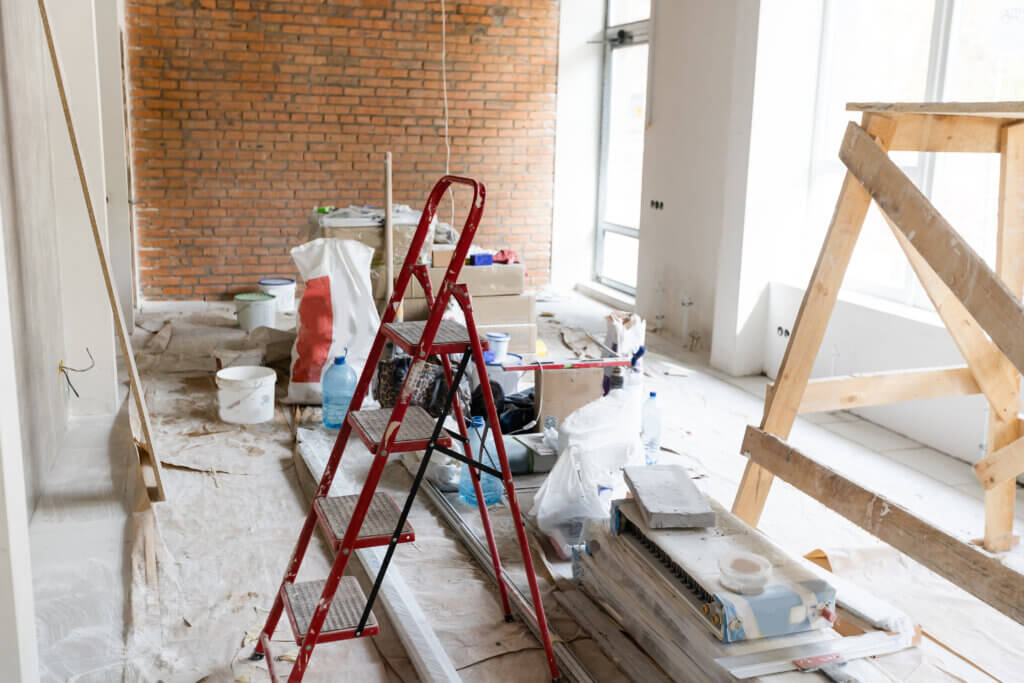
There’s no one-size-fits-all answer. After all, it makes a significant difference whether you’re simply painting the walls and replacing the floors, or whether you’re replacing all the plumbing, renovating the bathroom, and changing the floor plan.
As a rough guide, the following cost estimates can be used for 2026:
• Cosmetic renovation: about 250 to 450 euros per square meter, for example, for painting and replacing simple flooring.
• Partial renovation: approximately 500 to 900 euros per square meter, for example, when the bathroom, kitchen, or individual technical systems are replaced.
• Comprehensive apartment renovation: approximately 900 to 1,700 euros per square meter; significantly more for complex renovations of older buildings or high-end finishes.
Data from Statistics Austria also shows that construction work is costly: In September 2026, construction costs for residential buildings and housing developments were 5.7 percent higher than in the same month of the previous year. However, this trend should not be directly equated with the price increase for a single apartment renovation.
A significant portion of the budget is often allocated to electrical installations, plumbing, heating, and necessary structural modifications. While these projects are barely visible once completed, they are crucial for safety and living comfort.
It is therefore advisable to set aside a reserve of at least 15 to 20 percent of the calculated budget for unforeseen work.
What federal and state subsidies will be available in 2026 for apartments in need of renovation?
Anyone renovating an apartment should find out about potential grants early on. However, the grant landscape in Austria is complex: While the federal government primarily supports energy-efficiency measures, the federal states offer their own programs for various renovation projects.
It is important to note the current status: The federal government’s renovation bonus for thermal energy efficiency measures has been closed to new applications since February 2, 2026. The original funding for the 2026 Renovation Initiative was also exhausted in July.
A new subsidy for replacing fossil-fuel heating systems has been available since November 2, 2026. However, this subsidy is intended for private owners of single-family homes, two-family homes, and townhouses. Therefore, this new program does not directly apply to a typical condominium unit in a multi-family building.
A continuation of the renovation initiative has already been announced for 2027. New grant applications are expected to be accepted starting January 4, 2027. The specific requirements should be reviewed before the project begins.
In addition, there are state subsidies. In Vienna, for example, under certain conditions, subsidies are available for the installation of soundproof and insulated windows, heating system upgrades, age-accessible renovations, or the initial installation of a bathroom and toilet. Lower Austria offers, among other things, subsidy programs for thermal retrofits and certain individual measures.
Since grants are often subject to income limits, primary residence requirements, building age, or technical requirements, it is advisable to consult with the relevant state grant agency. The order in which you submit your application and begin construction can also be a deciding factor.
In what order should you renovate an apartment?
A successful renovation doesn’t start with choosing new tiles or planning your dream kitchen, but with a thorough assessment of the property’s current condition.
First, the structural condition of the apartment should be assessed, a renovation plan drawn up, and all necessary permits secured. Ideally, this should be done before the purchase. This is followed by detailed cost planning and hiring specialized contractors.
Only then does the actual construction work begin. Old fixtures and components that are no longer needed are removed. Where necessary, structural measures are taken and new wall structures are built. Afterward, the electrical, water, sewer, and heating systems are replaced or modified.
Once the technical work has been completed and inspected, plastering and drywall work, screed, waterproofing, and tiling follow. After that, flooring is installed, walls are finished, and doors and plumbing fixtures are installed. The final steps include the kitchen, lighting, and the last finishing touches.
Coordinating the various trades is particularly important. For example, if new pipes need to be installed after the fact, even though the walls are already finished, this results in unnecessary costs. The drying times for screed and other materials must also be taken into account.
Good planning therefore not only saves money but often also cuts construction time by several weeks.
Do I need a permit or the approval of the homeowners’ association?
Not every renovation requires a permit. If you’re painting walls, replacing flooring, or installing a new kitchen, you generally don’t need a permit from the building authority, as long as no significant structural changes are made.
The situation is different when it comes to major changes. If load-bearing walls are altered, new openings are created, or significant structural changes are made, a building notification or building permit may be required. Which regulation applies depends on the federal state and the specific project.
In Vienna, according to the City of Vienna, a building notification is sufficient for many interior alterations. Certain more extensive renovations, however, require a building permit.
In the case of condominiums, the Condominium Ownership Act also comes into play. In principle, owners are permitted to make changes to their units. However, if such changes could adversely affect the legitimate interests of other owners, their consent is required. This applies, for example, to alterations to common areas of the building, changes to the facade, or certain structural additions.
Under certain conditions specified by law, a lack of consent may be replaced by a court order. There are also simplified consent procedures for certain measures.
It is important to note that a building permit and consent under condominium law are two different things. Before undertaking major renovations, you should therefore always consult with both the relevant building authority and the property management company—or seek expert legal advice—to determine which documents are required.
How can I tell if a property needs renovation before I buy it?
Not every defect is visible at first glance. While worn-out floors or an old bathroom are immediately noticeable, problems with plumbing, moisture, or the building’s structure often remain hidden.
Buyers should pay particular attention to water stains, mold, cracks, leaky windows, or unusual odors. An outdated fuse box may also indicate that the electrical system needs to be updated.
You should also take a close look at the heating system, the plumbing, and the energy performance certificate. The energy performance certificate provides important information about the building’s energy efficiency, but it is no substitute for a technical inspection.
Equally important is the condition of the entire building. The Vienna Chamber of Labor recommends that prospective buyers review, among other things, the land registry records, the building permit, the condominium ownership agreement, the existing reserve funds, and the minutes of the owners’ meetings before signing a contract.
This is because even a newly renovated apartment can end up being expensive if, shortly after the purchase, a decision is made to carry out extensive roof or facade renovations and the reserve fund is insufficient to cover the costs.
For older properties, it is therefore worth scheduling a second viewing with a building inspector. Their fee is usually money well spent when compared to potential follow-up costs.
How do I finance the purchase and renovation?
Anyone buying an apartment in need of renovation should view the financing as a comprehensive project from the very beginning. This is because, in addition to the purchase price, there are not only real estate transfer taxes, land registry fees, and contract preparation costs, but also all expenses related to the planned renovation work.
For example, it is possible to finance both the purchase and the renovation together through a mortgage. This requires that the bank assess the project accordingly and that sufficient collateral is available.
Alternatively, the renovation can be paid for with personal funds or a separate loan. Which option is more cost-effective depends on the interest rate, the loan term, and your personal financial situation.
When granting loans, Austrian banks continue to follow the recommendations of the Financial Market Authority. Among other things, these recommendations stipulate a maximum loan-to-value ratio of 90 percent as a general rule, a debt-to-income ratio of no more than 40 percent of annual net income, and a maximum loan term of 35 years as guidelines for sound financing.
It’s also important to note that additional costs may arise during the renovation—such as rent for temporary housing, commitment fees, or unexpected construction work.
Anyone who maxes out their financing down to the last euro therefore risks running into difficulties. It is better to make a realistic overall calculation with sufficient financial leeway.
Can I claim renovation costs as a tax deduction?
A distinction must be made here between owner-occupied and rental apartments.
Anyone who renovates an apartment exclusively for personal use generally cannot simply deduct ordinary renovation work—such as painting, new flooring, or a new kitchen—from their income tax.
An exception may be the so-called “eco-special-expense allowance.” According to the Federal Ministry of Finance, if the legal requirements for a subsidized thermal energy retrofit are met, 800 euros per year can be claimed as special expenses, and for a subsidized boiler replacement, 400 euros per year—in each case over a period of five years.
In particular, this requires corresponding federal funding as well as sufficient out-of-pocket expenses after deducting public funding. These amounts reduce the taxable base and should not be equated with a cash payment of this amount.
Different rules apply to rental properties. In such cases, certain renovation expenses may be deducted for tax purposes as income-related expenses. Depending on whether the expenses are for maintenance, repairs, or construction, they may be deducted immediately, spread over several years, or accounted for through depreciation.
Anyone purchasing an apartment as an investment property should therefore discuss the tax implications with a tax advisor before work begins.
What should you pay special attention to when buying an apartment in an older building in Vienna?
High ceilings, double doors, herringbone parquet flooring, and historic facades make Vienna’s older apartments particularly sought-after. But this distinctive architecture also presents technical challenges.
In buildings from the Gründerzeit era in particular, old plumbing, wooden beam ceilings, or historic ceiling structures can pose additional challenges for renovation. If walls are removed or new, heavy floor structures are planned, a structural assessment is often necessary.
Soundproofing also deserves attention. What seems like a given in a modern building can often only be achieved in a historic building through additional structural work.
Special attention should be paid to windows and facades. According to the City of Vienna, replacing windows and French doors in buildings constructed before January 1, 1945, generally requires a building permit. The same applies to buildings in protected zones. Certain design requirements must be met.
For historically protected properties, additional permits may be required. Existing fireplaces, gas lines, and old utility shafts should also be professionally inspected before any renovation work begins.
Anyone planning to rent out the apartment later should also clarify whether and to what extent the Tenancy Law applies. Special tenancy law provisions may apply, particularly to older Viennese buildings.
As tempting as the high ceilings and beautiful historic details may be, a thorough technical and legal review is especially important for properties like these.
An apartment in need of renovation can be an excellent investment in your own quality of life. However, this is contingent on the purchase price, the structural condition, and the renovation costs being in reasonable proportion to one another. Those who plan professionally, compare offers, and factor in sufficient financial reserves can turn an old apartment into a home that is not only beautiful but also brings long-term joy.
Buying an Apartment in Need of Renovation: Free Checklist to Download
Our free checklist shows you what you should clarify before buying and while planning your renovation. Use it to check items off, take it with you, and ask questions—so you’re fully prepared.
Download the free checklist for apartments in need of renovation
FAQ: The 7 Most Common Questions About Apartments in Need of Renovation
For an average-sized apartment, a comprehensive renovation can take several months. The key factors are the structural condition of the building, the scope of the work, necessary permits, and the availability of contractors.
It is recommended to set aside a reserve of at least 15 to 20 percent of the estimated renovation costs. For very old buildings or those with an unclear structural condition, a larger buffer may also be advisable.
This is often possible for smaller renovation projects. However, if the electrical system, plumbing, bathrooms, and floors are being completely replaced, temporarily moving out is usually the more practical solution.
Electrical installations, work on gas lines, safety-related plumbing installations, and modifications to load-bearing structural elements should be handled by licensed contractors. Professional assistance is also necessary when dealing with potential hazardous materials.
Yes, this is particularly advisable for older properties. An expert assessment can uncover hidden defects and help provide a realistic estimate of the actual renovation costs.
Yes. A clear renovation plan and specific cost estimates can be strong arguments during price negotiations. However, whether and to what extent the seller will concede depends on market conditions.
A professionally renovated apartment can be more attractive on the real estate market. However, there is no automatic increase in value equal to the renovation costs incurred. The key factors remain, above all, location, the condition of the building, the floor plan, and demand.
Similar posts:
Builder’s Liability Insurance in Austria
Installing an Air Conditioner: What’s Allowed and What Isn’t